
Blog

Securing Legacy OT Systems

Legacy operational technology (OT) systems are still heavily relied on by much of the industrial and critical infrastructure sectors. As digital transformation becomes the new norm, these legacy systems present complex challenges to implementing vital cybersecurity measures.

The Challenge

Legacy systems may include components that are decades old– meaning their designs never accounted for modern cyberthreats and the implications of digital convergence.

As these systems reach end-of-life (EOL), lack of updates and patches, discontinuation of vendor support, and incompatibilities with emerging tech compound the risk of critical disruption.

Best Practice Solutions

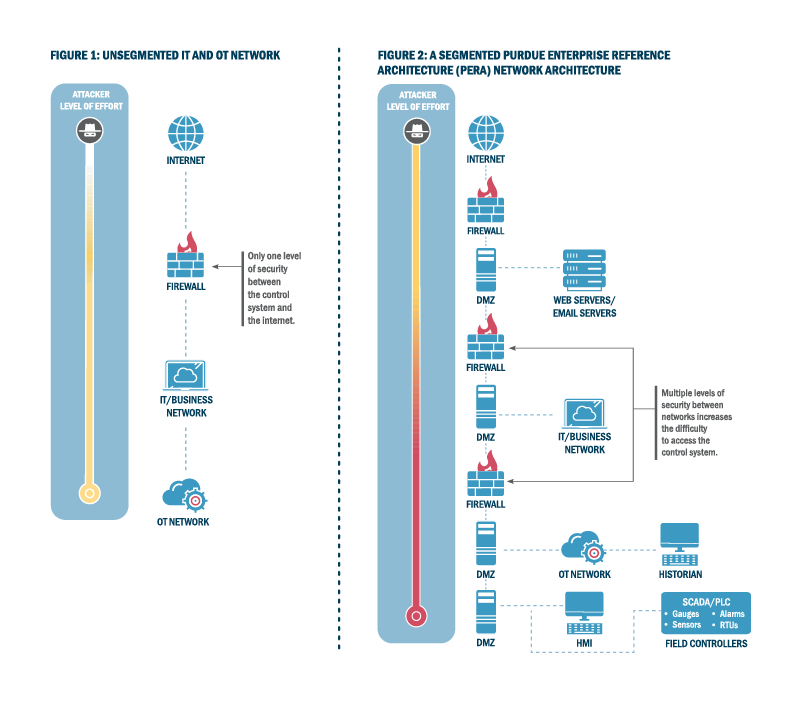
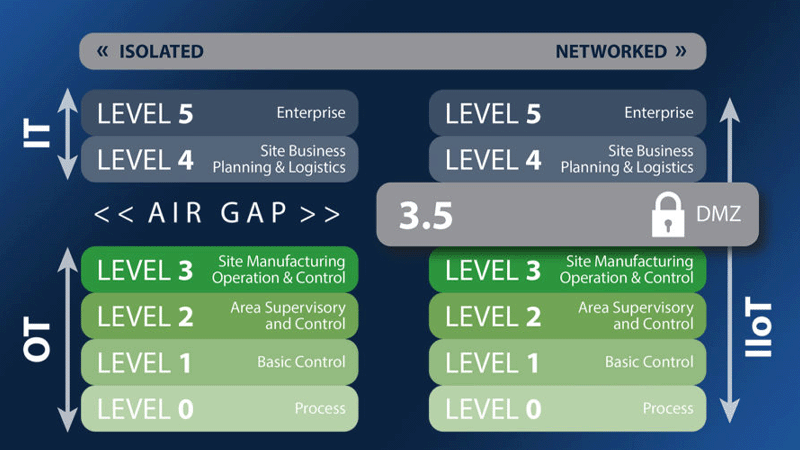
Network Segmentation

By isolating critical systems, you can reduce the spread of cyberattacks and limit the potential impact of security breaches.

Cybersecurity Audits

Regular reviews of cybersecurity policies and controls can identify vulnerabilities, ensure regulatory compliance, and uncover inefficiencies.

Access Control

Enforcing strong authentication, authorization, and accountability mechanisms ensure only the necessary personnel have access to critical systems.

Incident Response Planning

Developing and routinely testing an incident response plan enables the efficient identification and mitigation of cyber incidents.

The Takeaway

Integrating new tech into legacy OT systems can seem daunting, but with an informed understanding of the risks and a commitment to implementing best practices, you can protect your organization’s critical systems and stay competitive in the digital age of industry.

Let's collaborate.

Schedule a no-cost consultation today.


solution brief

Disaster Recovery


More Posts

Read More
Blog

Choosing the Right Control System for Your Facility

Is your control system approaching its end-of-life product lifecycle?
Does your system rely on replacement parts that are increasingly harder to find?
Is it difficult to find personnel experienced with your control system?
It may be time to upgrade.

How do you choose the right system?

When you have identified that it’s time to upgrade your control system, you want to explore all the options that are available to you. It is especially important to find a control system that best fits your application. For example: if you need to upgrade a controller, you will avoid upgrading the entire control system.

Some manufacturers’ control system platforms offer a variety of upgrade and migration solutions and strategies. For some end users, there are migration strategies that may be a better solution than a complete upgrade. In other cases, a complete system upgrade may be the answer. Most of the time the best solution is somewhere in between. Understanding your unique needs and expectations is vital to choosing the proper system. This can be a challenging task if you don’t have the required information.

Some things to consider:

  • Lifecycle of Existing Assets
  • Pros/Cons of Technology Solution Options
    • Evaluated by an unbiased party with hands on experience
    • How will the technology solution better enable you to meet industry requirements and best practices such as safety and cybersecurity (ISA, NFPA, CISA)?
  • Feasibility and Impact of the Solution
    • Technology solution and strategy
    • Potential downtime and risk mitigation
  • Maintenance and Support
    • Effort required to maintain the system
    • Training of staff to maintain the system
    • Identify established partners to provide timely support
  • Total Cost of Ownership
    • Evaluated by an unbiased party with hands on experience

We’re here to help.

Finding a system that meets your needs and understanding how it will function and grow with you can be a challenge. Champion's team specializes in leading clients through the process of choosing a control system that is right for their specific needs – and their budgets. As part of our process, we will work with your team to define your goals and expectations, conduct an assessment, and recommend the best, unbiased solution that aligns with your goals. We can bring your control system from the past to the present while you plan for the future.

Let's collaborate.

Schedule a no-cost consultation today.


more on our website

Industrial Automation


More Posts

Read More
Blog

Do you have cost-effective support for your multivendor install base?

Is your industrial control system comprised of multiple manufacturers or platforms? Do you know which service team to call when an issue arises? Original Equipment Manufacturers (OEMs) can offer support on their products but often come up short in environments where their equipment is integrated with other “unsupported” equipment.

This is where a System Integrator comes in.

Champion, with expertise in every major industrial control system, supports all parts of your facility’s systems under one agreement tailored to your specific needs. Typically, response times are quicker than a manufacturer would be thanks to the scope and experience of our team. Combined with our Secure Remote Support offerings technology, we are able to provide you services anywhere at any time.

Whether your facility already has in-house support staff, or requires a primary support contact, Champion can offer guaranteed response times based on your needs. Industrial clients can also benefit from our multi-vendor support by receiving unbiased recommendations about system upgrades, network configuration, cybersecurity, and more.

Lastly, Champion’s 24UP® Solutions often save clients money over multiple OEM service contracts or in-house support staff with a ‘one stop shop’ support solution for your industrial control systems and Operational Technology (OT) assets. So whether you prefer a secondary support option or a full umbrella of support, we can tailor and provide the right solution for your needs and budget.

Let's collaborate.

Schedule a no-cost consultation today.


more on our website

Industrial Automation


More Posts

Read More
Blog

The Hidden Costs of Your Legacy Systems

“My old control system is still hanging in there. How can I justify a costly replacement to management?” This is an age-old question, to which many believe: “If it ain’t broke, don’t fix it.” However, when it comes to Industrial Control Systems (ICS), this approach is often the riskier and costlier route for facilities.
The answer lies in Total Cost of Ownership (TCO) – a method of engineering, economic, and financial analysis. TCO aims to consider all of the direct and indirect costs related to a product over its lifetime. The TCO of your car isn’t just the purchase price, but all the related costs over the time you own it: gas, financing, insurance, maintenance, depreciation, and more. The same approach can be applied to a control system over its lifetime.

Common Hidden Costs

Maintenance

The cost of maintaining legacy systems grows exponentially with age. This is due to increased routine problems, along with added system complexity from customization and changes. Over time, updates become more time-consuming and costly.

Talent

In parallel with maintenance costs, talent costs are much higher on a legacy system. Not only are the costs exorbitant in man-hours, but unlike on newer systems, they often require skill sets that are expensive and difficult to find.

Support

As proprietary legacy systems reach a point of limited or discontinued vendor support, the costs of support begin to soar. Tie this to increasing talent costs for external support, longer support response times, and – dare we say it – interruptions in production that affect your bottom line at its core.

Compliance

With industry regulations continually changing, the cost of keeping legacy technology in compliance can be burdensome. Even more costly are the risks of noncompliance, with penalties or fines adding to your Total Cost of Ownership.

Lost Revenue Potential

Without newer features such as mobile data access, or the ability to gather and act via analytics tools, your plant operates on inefficient processes, lower production output, and results in a dwindling bottom line.

New Tech, New Benefits

Implementing new technology can bring a wealth of benefits, from risk reduction and meeting heightened regulatory standards to better decision-making and improved efficiency. Technology of today enables facilities to be more agile, innovative, and cost-effective in an ever-evolving climate.

Concerns of process interruptions can most times be eliminated using well-planned migration approaches, and increased security can alone make the switch a worthwhile investment. Champion’s Certified Cybersecurity Experts are trained in the latest ISA/IEC 62443 standards for Cybersecurity, ensuring your new system benefits from the most current, comprehensive safeguards.

At some point, legacy technology becomes a barrier to daily operations, business stability, and overall growth. By knowing the true cost of running legacy systems, industry leaders can see the clear return on investment (ROI) of embracing new technology and its upward-driving effects on your bottom line.

Let's collaborate.

Schedule a no-cost consultation today.


more on our website

Industrial Automation


More Posts

Read More
Blog

Don’t Hire a System Integrator — Until You Answer These 3 Questions

You’re considering hiring a System Integrator for your company’s automation processes. But, where to begin? Aren’t all integrators alike? Not really. Below are a few questions to consider before choosing the right integrator for you.


People

Are the Integrator’s staff experienced and committed to your needs?

While selecting a particular platform or technology from a myriad of vendors is critical, having the right people with the right support skills (and winning mindset!) is just as imperative.

Ask these questions about their people:

  • What types of experts do you have on staff?
  • What experience do you have with the platform I use?
  • Does your company invest in having personnel trained within industry associations such as ISA and PMI?

Champion knows a System Integrator is only as good as its people. That’s why we put so much importance on the hiring, professional development, and nuturing of our workforce culture.

Our Mission puts it best: To improve the overall safety, well-being, and prosperity of our employees, our company, our clients, and our communities through the intelligent and efficient application of the resources and technologies currently available.

Performance

What is the System Integrator’s experience with my industry?

If you ever hear the phrase, “Industrial Automation is the same across all industries,” you probably want to keep looking.

Be sure to ask these types of questions:

  • How long have you worked in my industry?
  • What types of industry-related processes have you automated in the past?
  • What is your success rate for my type of project?
  • How do you keep up with the latest automation innovations in my industry?

Champion holds extensive automation experience across a diverse set of industries. This knowledge didn’t just “happen” overnight; every industry has its own set of operational nuances, regulatory standards for Safety and Quality, and requirements to ensure the highest satisfaction.

Champion continues to grow with the latest technologies, standards, and industry best practices to keep our clients operating at peak performance.

Processes

Does the Integrator have tried-and-true workflow processes?

If the System Integrator you’re considering speaks broadly about their work but struggles to provide time-proven workflow processes to achieve goals, be extra cautious before proceeding.

Be sure to ask these types of questions:

  • What does a typical project look like from start to finish?
  • How does the System Integrator communicate with their client?

Champion’s Project Life Cycle is client-focused.

What does this mean? It means we tailor our solutions to meet the needs and criteria of our clients. From Conceptual Planning & Front-End Engineering, to Project & Program Management, Commissioning & Start-Up, and ongoing Support Services, we are able to meet the needs through the entire life cycle and beyond.

Let's collaborate.

Schedule a no-cost consultation today.


more on our website

About Us


More Posts

Read More