
Article

Turning the Plan into Performance: Execution in OT Modernization

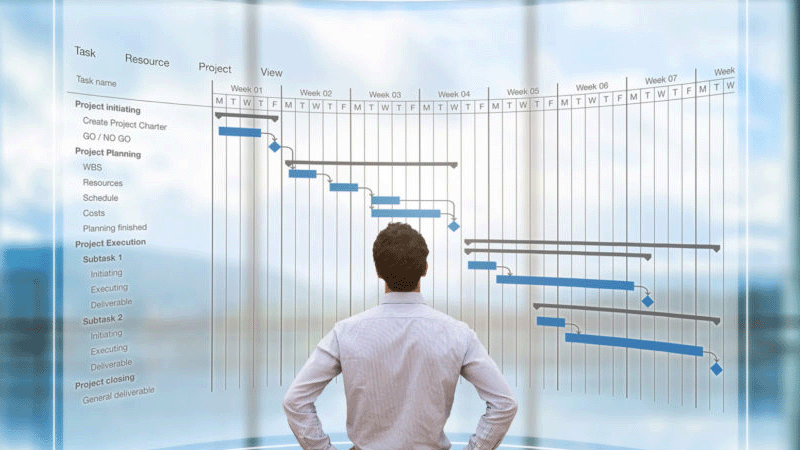
After the Front-End Loading (FEL) phase, the true test of an OT modernization project lies in execution, where a solid plan meets the realities of a live manufacturing facility. The success of the FEL phase is validated during implementation, as precision, coordination, and alignment with operations ensure continuity and bring the strategy to life. 

Flawless Execution in a Live Facility 

Modernizing an active facility requires more than technical expertise, it demands close collaboration with operations to align priorities, timing, and risk tolerance. Production is top priority, so every step must be executed safely, efficiently, and with full operational visibility. 

Key priorities: 

  • Maintain Safety: Safety remains the highest priority throughout execution. All activities are planned with site safety and operations teams to ensure compliance with facility procedures and regulatory standards. Work is performed under approved permits with proper isolation and lockout/tagout (LOTO) practices to protect personnel, equipment, and process integrity. 
  • Coordinate with Operations to Minimize Downtime: Work in close alignment with operations to plan phased or hot cutovers, conduct pretesting, and schedule activities precisely, reducing unplanned outages while maintaining production continuity. 
  • Ensure Quality: Each step is executed with precision and discipline. Quality assurance spans installation, configuration, and testing, from FAT and SAT to operator validation, to confirm reliability, performance, and long-term maintainability. 

Commissioning & Go-Live

Commissioning marks the most critical stage of modernization. A prioritized, strategy-driven approach to cutover planning ensures each step is deliberate and predictable. 

  • Integrated Testing: Rigorous testing validates system components and interfaces under real operating conditions. Hardware, communication, and control logic are verified through end-to-end simulations, ensuring new and legacy systems function seamlessly before cutover. 
  • Prioritized Cutover Strategy: Transitions are sequenced by process criticality, risk, and readiness. The plan identifies systems suited for routine outages, phased cutovers, or hot-cutover techniques, minimizing disruption and ensuring clear execution 
  • Seamless Transition: Whether phased or full replacement, success depends on synchronized operations and engineering teams. Coordinated handovers and detailed turnover packages ensure each step is controlled, documented, and reversible if needed. 
  • Real-Time Monitoring: During and after go-live, continuous monitoring verifies stability and performance. Diagnostics and alarm tracking enable quick resolution of issues, maintaining uptime and operator confidence. 

The Champion Advantage 

Modernization success is measured by how seamlessly new systems perform in live operations. Champion applies a disciplined execution model built around the following principles: 

  • Operational Alignment: Close collaboration with facility operations ensures every action supports production goals and minimizes disruption. 
  • Phased Cutovers: A structured, stepwise approach enables controlled transitions, maintaining uptime while integrating new systems. 
  • Risk-Based Prioritization: Each activity is sequenced by criticality and process impact, ensuring the safest and most efficient path to completion. 
  • Predictable Outcomes: Proven execution practices and real-time coordination deliver safe, on-schedule, and on-budget results. 

Flawless execution is the bridge between planning and performance, and it’s where Champion’s experience ensures lasting results.

Let's collaborate.

Schedule a no-cost consultation today.



from the blog

Modernizing Your OT Systems with a Proven Roadmap


More Posts

Read More
Article

Building a Strong Foundation: Why FEL is a Great First Step in OT Modernization 

Operational Technology (OT) modernizations should be viewed as a strategic journey rather than a single event. Achieving success requires establishing the right foundation from the very beginning.
That foundation is Front-End Loading (FEL), the Planning & Budgeting phase where ideas become executable plans. Too often overlooked, this step determines whether a project avoids costly pitfalls or stalls before delivering value. 

What FEL Delivers 

The FEL process defines the scope, objectives, and feasibility of a modernization initiative. The goal is clear: reduce risk, optimize investment, and align all stakeholders. Without it, projects risk scope creep, delays, and outcomes that fail to meet operational needs. 

Step 1: Understanding the Current State 

The process begins with a comprehensive review of the existing OT environment, moving beyond a simple inventory of hardware. 

  • Assess the health of aging systems and unsupported software 
  • Identify network vulnerabilities and security gaps
  • Analyze outdated control strategies
  • Pinpoint inefficiencies that drain time and resources 

This analysis establishes a clear picture of the current state and the challenges that must be addressed.

Step 2: Defining Success & Building the Business Case 

Clear, measurable goals are then established, whether it’s reducing unplanned downtime by 15%, enabling data-driven insights, or meeting new compliance standards.

These objectives form the basis of a business case that connects the project directly to organizational strategy, turning modernization into a value driver rather than a technical exercise. 

Step 3: Technology & Vendor Evaluation

With requirements defined, the next step is to identify the right technologies and vendor solutions. This may include modern DCS platforms, industrial cybersecurity tools, or scalable network architectures. 

A vendor-neutral evaluation ensures that solutions are selected based on alignment with the organization’s unique needs rather than a predetermined set of offerings.

Step 4: Roadmap & Budget Creation 

The FEL process concludes with a detailed roadmap and budget that outlines phases, milestones, and investment requirements. This structured plan provides clarity, transparency, and discipline for the execution stage. 

The Champion Advantage 

Front-End Loading is where project outcomes are made or broken. Our team brings unbiased expertise, proven frameworks, and practical field experience to ensure this stage delivers. By investing upfront in FEL, organizations can avoid costly overruns, minimize downtime, and set the stage for lasting transformation. 

With the right partner, modernization is not just an upgrade, it becomes a strategic path to reliability, resilience, and long-term success. 

Let's collaborate.

Schedule a no-cost consultation today.


from the blog

Modernizing Your OT Systems with a Proven Roadmap


More Posts

Read More
Article

Modernizing Your OT Systems with a Proven Roadmap

In today’s critical infrastructure and OT environments, modernization isn’t optional, it’s essential. Outdated control systems bring risks through unsupported hardware, obsolete networks, and growing cybersecurity threats. But modernization is more than swapping out old equipment. True success requires a structured journey that starts with a clear front-end strategy.

Modernization is an opportunity not only to upgrade, but to transform. That opportunity begins with the Front-End Loading (FEL) process.

Phase 1: Planning & Budgeting (FEL)

The FEL stage sets the foundation for the entire project. This structured, upfront planning process defines scope, feasibility, and success criteria before execution begins.

  • Risk Reduction: Identify potential pitfalls early, from technical gaps to budget constraints.
  • Optimized Investment: Direct capital, time, and staff toward the most impactful outcomes.

Phase 2: Execution & Implementation

With a solid plan, execution transforms strategy into reality. This stage goes beyond hardware and software installation, it’s about precise integration that sustains continuity and maximizes value.

Key priorities include:

  • System Integration: Unify platforms and third-party systems so teams access the right data, at the right time.
  • Security by Design: Embed cybersecurity controls from the start, not as an afterthought.
  • Operational Continuity: Align with plant schedules to reduce downtime and maintain production.

Phase 3: Run & Maintain

Modernization doesn’t stop at commissioning. Sustained performance requires proactive strategies to reduce downtime and extend asset life.

Champion’s 24UP® offering shifts facilities from reactive “break-fix” models to continuous monitoring, helping you:

  • Anticipate and address issues early
  • Protect uptime
  • Maximize ROI

Why Partner with an Independent Expert?

Internal teams know their systems best, but an independent third party brings added perspective and specialization:

  • Objective Analysis: Solutions tailored to your needs, not vendor limitations.
  • Specialized Expertise: Engineers with deep OT and IT/OT integration knowledge.
  • Resource Augmentation: Extra capacity so your staff can focus on daily operations.

The Champion Advantage

With Champion, modernization isn’t a one-time upgrade. It’s a strategic path to reliability, resilience, and long-term success.

Let's collaborate.

Schedule a no-cost consultation today.


more on our website

24UP® Solutions


More Posts

Read More
Article

From Insight to Action: Unified OT Cybersecurity

The OT Cybersecurity Gap: Assessors vs. Remediators

In industrial operational technology (OT), cybersecurity is not a one-time checklist, it’s a continuous necessity. For organizations in critical infrastructure, the journey usually begins with a cybersecurity assessment to identify vulnerabilities and risks.

But here’s the challenge: remediation is often handed off to a different vendor. This separation can slow response times, create confusion, and leave your OT environment exposed.

Why should one partner do both?

Because the most effective cybersecurity isn’t siloed, it’s integrated. Aligning assessment and remediation under one expert team reduces friction and delivers faster, smarter protection.

Bridging the Assessment–Remediation Divide

Engaging separate entities creates unnecessary risk and inefficiency:

  • Interpretation Gaps: What one team flags, another may downplay or miss entirely, especially in OT-specific systems.
  • Delays & Handoffs: Repeatedly explaining your network wastes precious time.
  • Accountability Issues: When fixes fail, finger-pointing often replaces ownership.
  • Context Loss: Remediators who weren’t part of the assessment lack critical insights about your systems and operations.

The Value of a Unified OT Cyber Partner

1. One Team, One Strategy

With one team guiding the process from discovery to fix, you gain:

  • Clear Alignment: Solutions designed by the same people who will implement them.
  • Reduced Miscommunication: No reinterpreting risk reports.
  • End-to-End Accountability: One partner owns the outcome.

2. Faster Time to Protection

Speed matters. With a unified team:

  • No Learning Curve: Immediate action based on firsthand knowledge.
  • Direct Communication: Faster decisions, fewer delays.
  • Less Downtime: Solutions executed with full awareness of operational constraints.

3. Cost-Efficient, Targeted Remediation

Better context equals smarter fixes:

  • Precision: Fixes are relevant and necessary, no wasted effort.
  • Fewer Errors: Eliminates rework from misaligned expectations.
  • Stronger ROI: Rapid risk reduction lowers potential incident costs.

4. A Long-Term Cybersecurity Ally

Beyond just projects, a combined approach builds a partnership:

  • Ongoing Insight: A team that’s been there before can proactively support future improvements.
  • Trusted Guidance: Consistent support from experts familiar with your people, systems, and risk profile.

The Champion Advantage

Champion Technology isn’t just an OT cybersecurity assessor; we’re your remediation partner too. From risk identification to hands-on resolution, we bring a deep understanding of industrial systems, network security, and operational constraints.

Our approach prioritizes continuity, communication, and cybersecurity without compromise, because in the world of OT, downtime isn’t an option.

Let's collaborate.

Schedule a no-cost consultation today.


more on our website

Industrial Cybersecurity


More Posts

Read More
Article

Factory Acceptance Testing: A Critical Step to De-Risk Control System Deployments

Why Factory Acceptance Testing Matters in Control System Projects🎯 

In the high-stakes world of industrial automation, Factory Acceptance Testing (FAT) is far more than a formality, it's a critical milestone that validates system functionality before it ever reaches the field.

For control systems and OT solutions, FAT provides a structured, repeatable environment to detect logic errors, integration issues, and design gaps, well before they can disrupt operations.

Champion’s Edge: Infrastructure and Expertise That De-Risk FAT 🔧

At Champion, we don’t just conduct FAT, we engineer it for success.

Our in-house simulation environments are equipped with:

  • Vendor-specific control hardware
  • Test racks and I/O simulators
  • Pre-configured operator workstations

This setup enables us to replicate real-world conditions and rigorously test each component—whether it’s Honeywell Experion®, Rockwell Automation, Emerson DeltaV, or hybrid environments.

With deep OT domain knowledge and integrated testing infrastructure, we ensure your system performs as expected—under load, under pressure, and under control.

Top 5 Reasons FAT Reduces Project Risk ✅

1. Catch Issues Before They Reach the Field

Our controlled test environments uncover misconfigurations, logic errors, and network issues long before on-site commissioning, saving time, cost, and operational downtime.

2. Validate Functional Design and Logic

From PLC code and HMI graphics to alarm management and SCADA point validation, Champion helps clients confirm that their system meets all functional specifications before deployment.

3. Boost Operator Confidence Through Simulation

Our FAT process includes realistic operator interaction using actual graphics, navigation workflows, and input/output simulations, helping users gain familiarity and confidence before go-live.

4. Strengthen Cybersecurity and Network Assurance

FAT also enables testing of industrial network solutions, Windows domain configurations, and role-based access controls to ensure secure, reliable system performance.

5. Support a Low-Risk, Structured Commissioning Phase

With Champion’s FAT preparation and documentation, commissioning becomes a controlled process, not a troubleshooting exercise.

Best Practices for Effective FAT Execution📋

  • Start Early
    Plan for FAT in your initial project scope and timeline.
  • Test What Matters
    Simulate realistic operations, not just scripted tests.

  • Involve the Right People
    Engage operations, cybersecurity, and IT stakeholders throughout the process.

  • Document and Sign Off
    Capture results, track issues, and create a clear FAT record.

  • Close the Loop
    Use insights from FAT to fine-tune configuration and commissioning.

🏅The Champion Difference: More Than a Checklist

FAT is your system’s first big test, and Champion ensures it’s a real one.

Our investment in simulation hardware, OT software environments, and seasoned engineering teams means we don’t just verify your system, we optimize it, harden it, and prepare it for day-one success

Let's collaborate.

Schedule a no-cost consultation today.


Solution Brief

Industrial Data Centers


More Posts

Read More
Article

Champion Celebrates 20 Years

What started out as a two-person endeavor in late 2000, steadily matured into a team of 125 people across the country in 2020. Champion has achieved amazing milestones – growing one office into nine, being part of the LSU Top 100, being named one of Control Engineering’s Systems Integrator Giants, and achieving steady growth year after year.

An incredible milestone: 20 years in business

None of this would have been possible without our dedicated team, continual process improvement, and of course – our clients. We are thankful and humbled by our clients’ unwavering dedication!

Through the years, Champion has made strategic adjustments to generate a culture that inspires and empowers talented individuals to make the world a better place through technology. By always staying at the forefront of technology and investing in our team’s professional growth, our clients realize the benefits in their day to day operations.

Whether implementing a control system upgrade, designing a new installation, assessing cybersecurity gaps, improving a facility’s safety systems, or enabling secure remote access for a full suite of OT Managed Services – our commitment to excellence remains steadfast.

At Champion, we believe the success of our clients is a direct reflection of our own efforts and successes. That’s why we will continue to provide the best solutions available at any given time. Independent of any equipment manufacturer or technology platform, our experts partner with you to evaluate needs, make recommendations, and execute the rollout that brings the most value to your facility.

From all of us at Champion, we thank you for trusting in our team to provide the solutions and systems that best achieve your goals. We look forward to the next 20 years, as we continue to grow together.

Let's collaborate.

Schedule a no-cost consultation today.


more on our website

About Us


More Posts

Read More
Article

Safe and Sound Delivery

Moving data is imperative to a successful business. Whether it’s from one area of your organization to another or to an outside party, transferring information and files is part of everyday work. But if that information is particularly sensitive or proprietary, certain precautions must be made to ensure it is protected from being compromised.

Data that should be securely transferred:

  • Proprietary Data – any data that must be kept private for confidential, competitive, or other business reasons. This sensitive data can be your company’s internal knowledge base, plans, communications, recipes, processes, financials, or other intellectual property.
  • Client Data – any information owned by your clients that you use to do work for them. This may include batch recipes, processes, report results, etc.

Understanding the threats

The same threats to the general business IT system can also infiltrate the Operational Technology (OT) system which is the backbone of the facility. Threats to information come in many forms and usually occur from lack of diligence or knowledge on how to properly move information from place to place.

The impact? Risk of exposure. All threats to your network have the potential of stealing information that is vital to your business. This includes theft of intellectual property, identity, and information; sabotage; and even extortion of information. These threats include viruses, worms, trojans, bots, spyware, malware, ransomware, scareware, social engineering, and media attacks.

  • Unintentional Disclosure of Information – malicious programs can cause your data to be shared or seen by parties for which it was not intended. Data can be skimmed, intercepted, and used as ransom.
  • Compromised File Integrity – the loss or inability to maintain file integrity. Any file that can be modified proposes a security risk. Files can be intercepted and modified with malicious macros. What may look like a normal file, transferred by email or an FTP site, may now be a threat.
  • At-risk Channels of Operation – the security of an entire operational technology (OT) network and control system, including all devices, is at risk. Compromised files and PCs (configuration files, OT network devices files, firewalls) can wreak havoc on the overall health and function of the control system and the operation of the facility.

Distributing proprietary information safely

With these risks in mind, what is the best way to share files? The following scenario provides a glimpse of best practices in the real world.

An operator at a chemical plant has pulled a report of emissions data. The report must be delivered to the operator’s supervisor and the state regulatory agency. This data is proprietary information to the company and required by law to be reported.

How does the file get transferred to its proper recipients, internally and outside the company?

Internal Delivery

The data from the PLC is collected by the historian into a spreadsheet file which is used to generate the emissions report. All this occurs in the Operational Technology (OT) environment, not the business IT network. The operator can safely move the report from the OT network file server to the IT network server using Windows File Sharing with security and authentication enabled.

Any time data transits security zones (e.g., OT and IT), it must be subjected to security controls, including but not limited to, authentication, threat inspection, integrity validation, information sanitation, etc.

Once the file is on the IT network server, the report can be delivered internally per the company’s established protocol. This can be by email (if permitted), by internal file server, or by an approved cloud service.

Why not just put the report on a jump drive from the OT device then load it onto the operator’s computer? Because this method yields a greater opportunity for risk. Jump drive use provides the opportunity to connect to less secure zones and unauthorized machines. This means that malware has more opportunities to be installed on this drive.

Additionally, by using Intrusion Detection Systems and Security Information and Event Management systems, it’s possible to record, correlate and alert based on activity on the network.

External Delivery

Once data leaves company-controlled servers, it enters malicious territory and becomes more vulnerable. Delivering files externally must be done in a way that ensures the information gets to its final point intact and without being exposed to the wrong parties.

Using a Managed File Transfer System will ensure end-to-end security and encryption for the data.

Managed File Transfer Advantages

  • Secure from end-to-end (from sender to receiver).
  • Limits admission to only those meant to have access.
  • Interaction with a hosted file is logged and auditable – data is captured showing who and when the file was viewed, downloaded, changed, uploaded.
  • Helps facilitate large file transfers (little to no restriction on file sizes).
  • Users can request files to be sent to them from outside sources securely.

File sharing bad habits are dangerous, if not used correctly. These data transfer shortcuts are dangerous to your organization if not used properly.

Transfer Method Best Practices

  • Email with attached file - Limit to non-sensitive information only. Emails can be forwarded without any control as to who sees it.
  • Jump drives - Drives should be scanned for threats before each usage by a dedicated machine.
  • Commercial cloud sharing sites - Never use a personal cloud site. Use ONLY those managed by your company and deemed safe.

Mitigating cyber threats

Champion has the expertise and knowledge base to help you build a secure file transfer system which aligns with industry best practices and guidelines. Here are a few ways Champion can help make your OT systems more secure.

  • Perform Cybersecurity Risk Assessment.
  • Install anti-virus software and keep it up to date.
  • Install firewalls to create security zones and establish a DMZ between OT and IT networks.
  • Deploy a SIEM (Security, Information and Event Manager) to capture instances of bad habits, jump drive use, and users to identify threats.
  • Establish an Industrial Intrusion Detection System to monitor access and traffic to and from ICS and alert to abnormal activity.
  • Train employees on security best practices.

Let's collaborate.

Schedule a no-cost consultation today.


solution brief

System Hardening


More Posts

Read More
Article

The Top 5 Things You Can Do To Ensure A Successful Project

Champion Technology Services, Inc. understands that projects often come with headaches and unplanned surprises. That’s why our Project Management team is dedicated to delivering solutions on schedule, on budget, and without surprises. We’ll identify risks, determine how best to mitigate those risks, and keep an open dialogue with you through the process.

What makes a project successful?

  • Deliver the solution you need
  • Stay on schedule
  • Be done right
  • Stay on budget
  • …and be cognizant of any risks along the way — to deliver a robust solution as seamlessly as possible.

How can you facilitate that?

1. Clearly define project expectations.

Poorly defined projects almost always result in less than “ideal” execution. Be sure to specify exactly what is needed and set realistic expectations on delivery milestones.

Vague project expectations translate to delayed delivery of equipment, imprecise scheduling, and the need for change-orders: all of which affect your project’s bottom line.

Sometimes you may not know what you need, but you have a big-picture goal to achieve. That’s okay, too! Champion can offer more agile solutions you may want to consider. We can also help to narrow down your goals into smaller, manageable pieces with clear, actionable steps.

2. Review in detail any project proposals.

The proposal is the first step in achieving alignment between client and integrator. Here, a clear listing of requested (or recommended) deliverables to achieve a successful project is outlined. Review the full listing, ask questions if you need clarification, and ensure the deliverables match your expectations. If any items don’t align as expected, now is the time to discuss and have any modifications made to the proposal.

3. Review in detail the Functional Specifications.

The Functional Specification is the set of documents that outline your system’s design details. It explains how the system will work, what the graphics will be like, what the network will connect to, and more. This is where it is critical that you play an active role with your Project Manager.

Review all functional details to make sure they align with your needs and expectations. Once these documents are signed-off on, the system will be designed as outlined. That’s why its imperative that all stakeholders be in alignment to achieve successful delivery.

4. Keep an open dialogue with your Project Manager.

Transparency and regular communication is vital in the success of any project – not only for Project Managers, but also for you as a client. Communicate any alterations to the original project scope, timeline, or other factors which may affect the project execution.

5. Ask questions!

If you’ve ever had a FAT (Factory Acceptance Test) not go as expected, chances are it wasn’t a positive experience. One of the primary gaps that prevents successful project execution is a lack of common understanding between Project Manager and client. Ask questions when you’re unclear on next steps or if you sense that something is going awry. The issue can be resolved before it’s too late.

Technology is always evolving, and the acronyms abound. While Champion’s professionals are experienced in a diverse set of industries, we know that you are the expert of your specific industry. Conversely, as industrial automation experts, we don’t expect our clients to know everything about the technology solution. Asking questions is the best way to ensure the alignment of your expectations with the delivery of your project!

Let's collaborate.

Schedule a no-cost consultation today.


more on our website

About Us


More Posts

Read More
Article

Don’t Hire a System Integrator — Until You Answer These 3 Questions

You’re considering hiring a System Integrator for your company’s automation processes. But, where to begin? Aren’t all integrators alike? Not really. Below are a few questions to consider before choosing the right integrator for you.


People

Are the Integrator’s staff experienced and committed to your needs?

While selecting a particular platform or technology from a myriad of vendors is critical, having the right people with the right support skills (and winning mindset!) is just as imperative.

Ask these questions about their people:

  • What types of experts do you have on staff?
  • What experience do you have with the platform I use?
  • Does your company invest in having personnel trained within industry associations such as ISA and PMI?

Champion knows a System Integrator is only as good as its people. That’s why we put so much importance on the hiring, professional development, and nuturing of our workforce culture.

Our Mission puts it best: To improve the overall safety, well-being, and prosperity of our employees, our company, our clients, and our communities through the intelligent and efficient application of the resources and technologies currently available.

Performance

What is the System Integrator’s experience with my industry?

If you ever hear the phrase, “Industrial Automation is the same across all industries,” you probably want to keep looking.

Be sure to ask these types of questions:

  • How long have you worked in my industry?
  • What types of industry-related processes have you automated in the past?
  • What is your success rate for my type of project?
  • How do you keep up with the latest automation innovations in my industry?

Champion holds extensive automation experience across a diverse set of industries. This knowledge didn’t just “happen” overnight; every industry has its own set of operational nuances, regulatory standards for Safety and Quality, and requirements to ensure the highest satisfaction.

Champion continues to grow with the latest technologies, standards, and industry best practices to keep our clients operating at peak performance.

Processes

Does the Integrator have tried-and-true workflow processes?

If the System Integrator you’re considering speaks broadly about their work but struggles to provide time-proven workflow processes to achieve goals, be extra cautious before proceeding.

Be sure to ask these types of questions:

  • What does a typical project look like from start to finish?
  • How does the System Integrator communicate with their client?

Champion’s Project Life Cycle is client-focused.

What does this mean? It means we tailor our solutions to meet the needs and criteria of our clients. From Conceptual Planning & Front-End Engineering, to Project & Program Management, Commissioning & Start-Up, and ongoing Support Services, we are able to meet the needs through the entire life cycle and beyond.

Let's collaborate.

Schedule a no-cost consultation today.


more on our website

About Us


More Posts

Read More